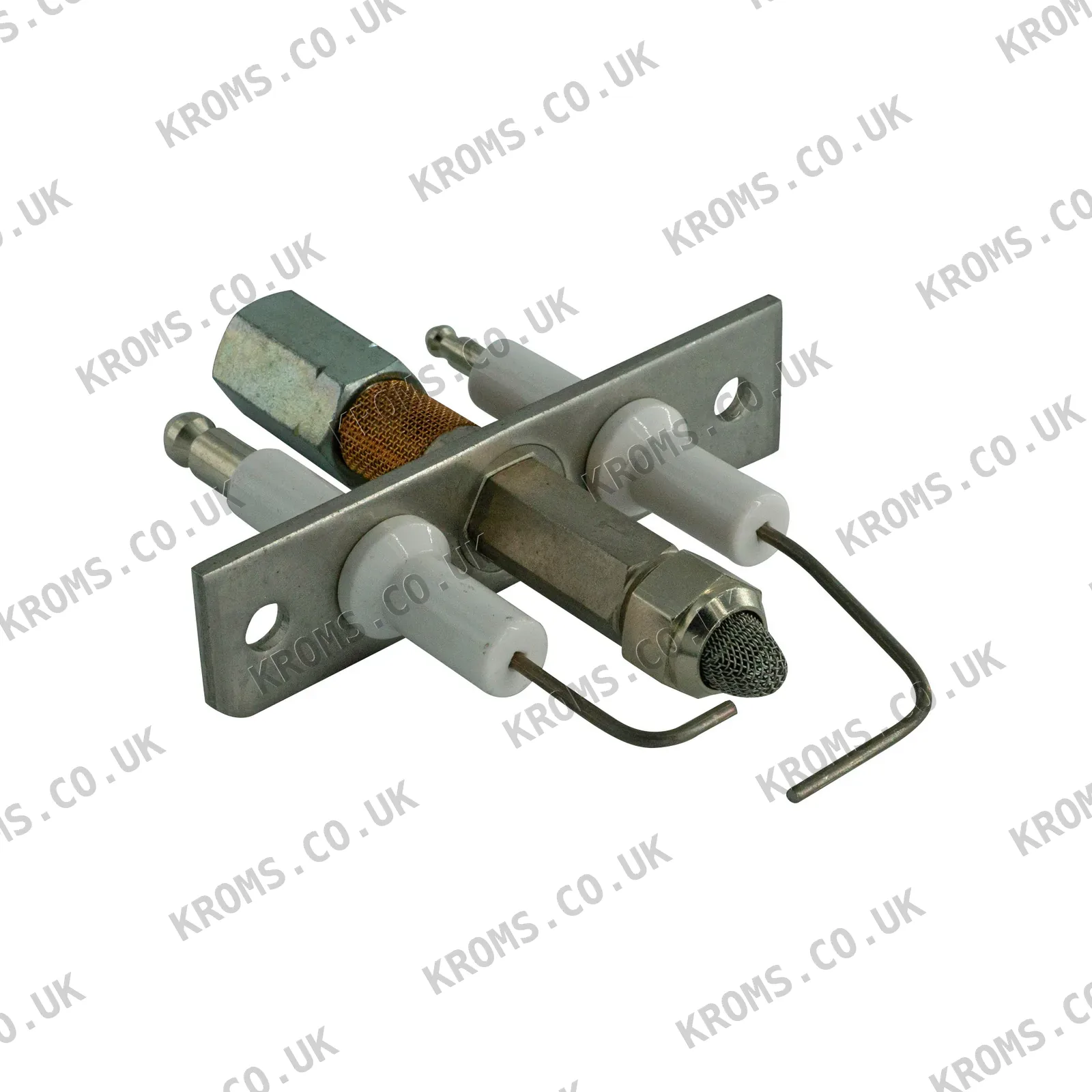
Honeywell Premix pilot burner Q358B2040B
SKU Q358B2040B
Brand Honeywell
Photos
Key specifications
| Flame sensing method | ionisation electrode (flame current) |
|---|---|
| Pilot burner system type | premix pilot burner |
| Air supply | premix |
| Compatible thermocouple | Honeywell Q309A |
| Reset type | mechanical |
| Application | gas boilers, water heaters |
| Burner series | Honeywell Q358 series (second generation) |
| Common failure mode | erosion of electrode tip |
| Flame type | target-type |
| Insulator material | ceramic |
| Operating principle | premix pilot burner |
| Spark gap drift | gap drifted out of specification |
618.92 EUR
562.65EUR
in stock · 2
incl. 21% VAT · 465.00 EUR excl. VAT · shipping calculated at checkout
- Worldwide shipping from stock
- Original manufacturer part
- Dispatch within 24 h for stocked items
Description
This is a premix pilot burner from the Honeywell Q358 series (second generation). It is designed for gas boilers and water heaters. The burner has a target-type flame directed at the thermocouple, which is compatible with the Honeywell Q309A thermocouple. Flame sensing is by ionisation electrode (flame current). The reset type is mechanical and the burner operates on a premix air supply.
Further details
| Design features | high resistance to clogging; nozzle and supply channel optimized for domestic gas characteristics |
|---|
Choosing and fitting
Parts of this type are selected by the burner series they are shaped for, the gas type (natural gas or LPG), and the required pilot flame output. The pilot burner includes an integrated electrode assembly, typically combining ignition and ionisation functions, so the electrode gap, ceramic insulator length, and mounting flange geometry must match the original component. Before ordering a replacement, verify that the gas orifice size and the air mixing setup correspond to the appliance design; an incorrect mixture leads to ignition failure or sooting.
Signs of failure
Common failure modes for pilot burners of this type include a cracked ceramic insulator, erosion of the electrode tip, and a spark gap that has drifted out of specification. These issues can cause delayed ignition or loss of flame signal. In operation, the pilot flame may not light, lift from the nozzle, burn unevenly, or produce soot.
All specifications
| Flame sensing method | ionisation electrode (flame current) |
|---|---|
| Pilot burner system type | premix pilot burner |
| Air supply | premix |
| Compatible thermocouple | Honeywell Q309A |
| Reset type | mechanical |
| Application | gas boilers, water heaters |
| Burner series | Honeywell Q358 series (second generation) |
| Common failure mode | erosion of electrode tip |
| Flame type | target-type |
| Insulator material | ceramic |
| Operating principle | premix pilot burner |
| Spark gap drift | gap drifted out of specification |
Part numbers
| SKU | Q358B2040B |
|---|---|
| Additional article | 534.205.002 |